

Mastering Facebook & Instagram Ads for Wellness Brands

Mastering Facebook & Instagram Ads for Wellness Brands: A Practical Guide to Paid Social
Scaling paid social for wellness brands now means balancing growth with stricter platform rules and rising privacy controls. This guide walks founders and marketers through how Facebook and Instagram ads operate under Meta’s 2024–2025 policy shifts, and it gives actionable tactics for compliant targeting, creative-first testing, and measurement that preserve conversion signals. You’ll get clear steps on which policy changes matter, how to rebuild audiences without relying on lower-funnel optimization, creative frameworks that speak to health-conscious customers, Instagram-first engagement plays for female founders, and measurement setups using server-side tracking and proxy KPIs. The focus is practical: what to test first, how to sequence prospects, and which metrics to trust so teams can move from experiments to repeatable campaigns. Below we map policy changes, optimization checklists, Instagram playbooks, tracking comparisons, and case-study frameworks tailored to wellness advertisers on Facebook and Instagram.
What Are the Key Changes in Meta’s 2025 Ad Policies for Wellness Brands?
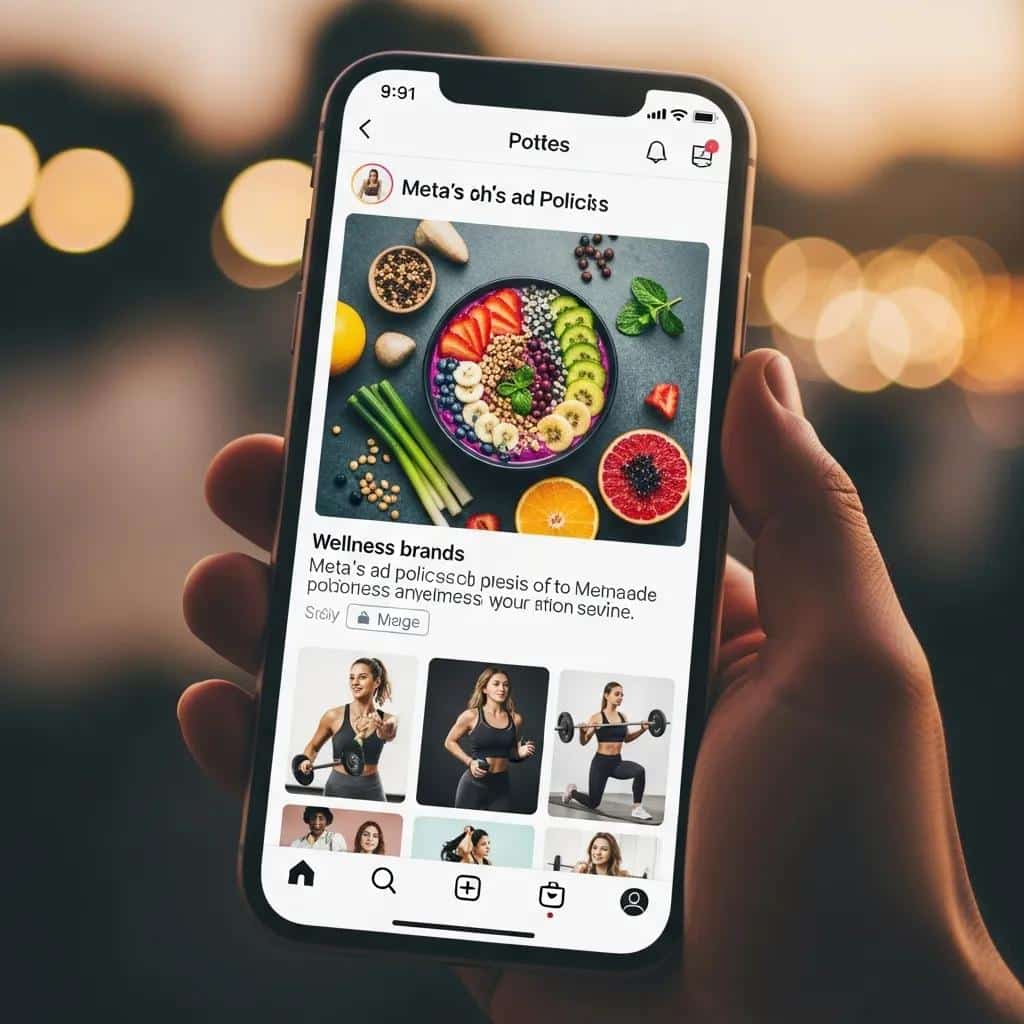
Meta’s 2024–2025 updates restrict some lower-funnel optimization signals and tighten scrutiny around health-related claims—changes that directly affect how wellness brands target and optimize campaigns. The platform now de‑prioritizes optimization toward purchase and add‑to‑cart events in sensitive verticals, leans into privacy-preserving modeling, and requires clearer substantiation for health claims. These updates respond to shifting privacy rules and to limits on inferring sensitive attributes, so advertisers need to lean more on first‑party data and upper‑funnel objectives.
This move toward privacy-preserving advertising reflects both changing user expectations and regulatory pressure.
Privacy-Preserving Targeted Ads on Social Media
a privacy-preserving matching service capable of determining when and how to present an advertisement to a user of an online social network
Targeted advertising that protects the privacy of social networks users, C Blundo, 2021
Practically, expect direct purchase ROAS to look noisier and test cycles to take longer while teams migrate to server-side tracking and modeled attribution.
To adapt quickly, prioritize creative relevance, lead capture, and measurement triangulation before trying to scale conversion bids.
Meta’s core policy shifts to watch are increased claim scrutiny and reduced access to certain behavioral signals. The next step is understanding how those changes affect targeting and compliance for wellness advertisers.
Major policy changes wellness brands should plan for:
- Reduced lower‑funnel optimization: purchase and add‑to‑cart events are deprioritized for sensitive categories.
- Stricter health‑claim review: ad copy and landing pages must substantiate medical or therapeutic claims.
- Privacy‑first modeling: attribution moves toward aggregated and modeled conversions instead of deterministic signals.
These shifts mean moving budget toward awareness and lead‑generation objectives while building first‑party datasets to support modeled outcomes and lifetime‑value measurement.
How Do Meta’s 2025 Policies Impact Facebook and Instagram Ad Targeting for Wellness?
Policy revisions reduce the granularity of health and behavior signals available for targeting, which weakens the effectiveness of very narrow interest-based audiences and some custom behavioral segments. In practice, highly specific wellness cohorts will reach fewer people efficiently, so lookalikes seeded with rich first‑party data and contextual targeting become more valuable for scale. Re‑map audiences by elevating first‑party segments—email lists, webinar registrants, engaged video viewers—into high‑quality custom audiences, then build value‑based lookalikes from those seeds. Start tests with broader Advantage+ campaign styles and layer contextual placements and creator-led formats to recapture intent. Validate reach and intent with lift or incrementality tests using upper‑funnel proxies like landing page views and leads before switching to purchase optimization.
Successfully shifting targeting also requires changes in how teams collect and segment data to create effective lookalike seeds; the next section covers compliance requirements you must follow when using these approaches.
What Compliance Requirements Must Wellness Brands Follow on Meta Platforms?
Wellness advertisers should follow a simple compliance checklist focused on truthful claims, clear disclosures, and documented substantiation for any explicit or implied health benefits. Avoid unverified medical claims, clearly label testimonials and paid partnerships, and ensure landing pages include supporting evidence or appropriate disclaimers. Make privacy and consent explicit: get clear consent for tracking where required, document first‑party data handling, and provide opt‑out options that meet local rules. Vet creative against Meta’s health content rules and review any regulated product categories (for example, supplements making therapeutic claims) before launch. Keep an audit trail and supporting documents to speed dispute resolution if an ad is flagged.
Seeing these rules in the broader context of brand safety and suitability helps explain why platforms are tightening content controls.
Social Media Ad Policy: Brand Safety & Suitability
Scholarship has long identified the business imperative to create an advertiser-friendly environment as a key influence on social media content moderation. However, “brand safety” – the industry term for advertisers’ measures to avoid content perceived as reflecting negatively on their brands – remains understudied. Drawing on policy statements from industry actors, as well as extant academic literature, this article makes four contributions. First, it proposes four distinct mechanisms through which branding imperatives influence platforms’ content governance. Second, it highlights two current trends: growing efforts by major advertisers to directly influence platforms’ content policies, and a shift in industry terminology from brand safety (avoiding content widely considered objectionable) to “suitability” (evaluating appropriate content for a particular brand) – which promises advertisers greater customisation, but in fact promotes the standardisation of content governance ac
From brand safety to suitability: Advertisers in platform governance, R Griffin, 2023
Following these compliance steps lowers approval risk and protects long‑term account health. Next, we cover practical optimization tactics that work inside these constraints.
Compliance checklist for wellness ads:
- Remove unverifiable medical claims: use supported, non‑diagnostic language only.
- Provide clear disclosures: label endorsements and paid partnerships transparently.
- Document consent and data use: retain records for first‑party audience creation and opt‑outs.
Following this checklist preserves ad delivery and builds trust; next we’ll outline optimization tactics that perform under the new rules.
How Can Wellness Brands Optimize Facebook Ads Under New Meta Restrictions?
Optimizing under Meta’s 2024–2025 constraints means shifting to upper‑funnel objectives, strengthening first‑party data flows, and adopting a creative‑first testing cadence to rebuild signal and performance. Launch campaigns optimized for landing page views, leads, or view‑through events while capturing high‑quality emails and behavioral signals to seed audiences. Implement Conversions API (CAPI) and server‑side tracking to send aggregated event data in privacy‑compliant ways—this improves modeled attribution over time. Prioritize short‑form video, UGC, and founder‑led messaging in creative tests to recover efficiency when deterministic conversion signals are weaker. Finally, diversify spend across channels and use cross‑platform attribution to triangulate performance when single‑source ROAS is noisy.
A step‑by‑step checklist to implement these optimizations:
- Implement Conversions API (CAPI): set up server‑side events to improve signal reliability.
- Shift optimization goals: use landing page views, leads, and video views as primary objectives.
- Build first‑party audiences: capture email signups, webinar registrations, and engaged viewers.
- Run creative‑first experiments: test multiple short‑form videos and messaging hooks quickly.
- Diversify and triangulate: run parallel tests across organic, influencer, and paid channels to validate signals.
This checklist gives a practical roadmap to stabilize performance while platforms complete privacy‑first measurement changes; next, we compare audience targeting options so you can pick the right seeding strategy.
Sarona Marketing typically bundles these steps into an integrated audit and implementation: auditing tracking, implementing server‑side CAPI pipelines, and structuring creative tests and audience sequences to stay compliant while restoring performance. For teams wanting hands‑on help, Sarona Marketing outlines a conversion‑focused engagement on the Let’s Get to Work page.
What Are Advanced Audience Targeting Strategies for Health-Conscious Consumers?
Advanced audience strategies depend on first‑party seeds and privacy‑respecting expansions instead of deprecated behavioral signals, creating durable cohorts that reflect real intent. Build custom audiences from high‑intent events—webinar attendance, multiple video engagements, lead magnet downloads—and then create value‑based lookalikes that weight lifetime value over one‑time purchases. Contextual targeting—placing ads near relevant editorial content or using topic‑level placements—is another strong way to reach wellness audiences without sensitive interest tags. Sequence audiences so high‑intent prospects see educational content before conversion ads to build trust and reduce policy risk. Regularly refresh seeds with recent converters and engaged users to avoid audience decay.
These audience recipes create resilient scaling paths that work with modeled attribution; the next subsection explains creative approaches that convert those audiences effectively.
How to Create High-Converting Facebook Ad Creatives for Wellness Brands?
High‑converting wellness creatives follow a clear formula: hook, value, social proof, and a compliant CTA—favoring short‑form video and visuals that feel native in feeds and stories. Open with a strong 3–5 second hook that calls out the viewer’s pain point, follow with a concise benefit in non‑medical language, then show brief social proof or relatable testimonials that avoid unverifiable claims. Use captions and readable subtitles for viewers with sound off, and test multiple thumbnails and opening frames to lift CTR. Run an A/B matrix that isolates hook, length, CTA phrasing, and proof format to see what nudges lower‑funnel actions when conversion optimization is limited.
Iterative creative testing builds the relevance signals Meta needs to model conversions. Once creatives deliver consistent engagement, pair them with re‑engagement sequences that drive leads and measurable downstream outcomes.
Creative testing matrix overview:
- Hook variants: problem‑focused, curiosity‑driven, founder‑led intro.
- Proof types: user story, before/after (non‑medical), expert endorsement (non‑therapeutic).
- CTA experiments: learn more, sign up, claim offer.
A structured creative plan speeds learning and produces higher‑quality first‑party data for audience building.
What Instagram Advertising Strategies Drive Engagement for Female Founders in Wellness?

Instagram rewards a creator‑centric, authenticity‑first approach for female founders who want to build community and convert followers into leads. Focus on short‑form Reels and sequential Stories that show founder stories, product rituals, and quick educational lessons—content that builds trust and identity with niche audiences. Use UGC and micro‑influencer content for native social proof, then amplify high‑performing organic posts into paid placements. Community‑building campaigns—inviting followers to join a live, download a toolkit, or sign up for a challenge—convert especially well for founder‑led brands because they follow relationship‑driven purchase paths. Measure success via engagement lift, DM intent signals, and lead capture rather than immediate purchases.
Below are optimal Instagram formats and when to use them so teams can pick the right creative mix for discovery and conversion.
How to Leverage Instagram Reels and Stories for Wellness Brand Growth?
Reels and Stories turn discovery into action by using short narratives that educate while feeling native. Structure Reels in three parts—name the problem, show a simple routine or product as a solution, and finish with a low‑friction CTA like “save this” or “join the challenge.” For Stories, use multi‑slide sequences to build intent: educate on slide one, demonstrate value on slide two, and ask for a lead action on slide three. Always add captions for accessibility and for viewers watching with sound off, and A/B test thumbnails and opening seconds to improve retention. Promote new Reels to small paid pockets first, then scale winners based on engagement and landing page activity.
These production and promotion steps help founder‑led wellness brands turn discovery into meaningful first‑party actions; the next subsection covers working with influencers to produce scalable paid assets.
How Can Influencer Marketing Enhance Instagram Ads for Wellness Brands?
Influencer partnerships extend reach and add native credibility when you repurpose creator content for paid amplification under clear compliance guardrails. Choose influencers whose audience and style match your brand, brief them to avoid medical claims, and require required disclosures. Ask for raw video files or rights to repurpose native‑feeling assets in Reels and Stories, then run small amplification tests to measure lift in signups and engagement rather than direct purchases. When purchase events are constrained, measure with proxy metrics—link clicks, signups, and engagement lifts—and run short controlled experiments to estimate incrementality. Favor ongoing partnerships with creators who consistently deliver high engagement to build longer‑term trust.
Sarona Marketing includes Instagram creative production and influencer workflows in its social and content services, focusing on founder‑led narratives and repurposing creator assets into paid campaigns; one client engagement illustrated the agency’s creative operations without publishing specific performance figures.
How Do Wellness Brands Use Data-Driven Optimization and Measurement for Meta Ads?
Data‑driven optimization now combines server‑side tracking, first‑party signals, and proxy KPIs to judge campaign outcomes when deterministic purchase events are less reliable. A good measurement framework prioritizes capturing high‑quality first‑party events, implementing Conversions API (CAPI) to feed server‑side events, and triangulating results with cohort analyses across channels. Use proxy metrics—landing page views, form completions, and content engagement—to model downstream value and build LTV‑based lookalikes for scaling. Consider multi‑touch and time‑decay attribution windows, and keep experiment logs and incrementality tests to validate causality. This reduces reliance on any single signal and gives a more defensible view of ROI under privacy‑first constraints.
Below is a comparison of tracking methods to help teams choose the right implementation for their site or app.
Choosing the right mix ensures robust inputs for modeling and optimization; next we cover key implementation essentials for Conversions API.
What Is the Role of Meta Conversions API and Server-Side Tracking?
Meta’s Conversions API (CAPI) is a server‑side integration that sends event data from your backend to Meta, improving event reliability and helping modeled attribution when browser signals are limited. Benefits include better fidelity for leads and purchases, higher match rates for audiences, and greater resilience to browser tracking prevention. Implementation needs server access or a server container in a tag manager, mapping of priority events, and careful hashing of identifiers to protect privacy. Common pitfalls are incomplete event mapping, delayed event firing, and inconsistent event names—test and validate against known events. Start with a prioritized list—page views, leads, subscriptions—then add richer attributes like lifetime value and subscription status once the pipeline is stable.
Correct CAPI setup improves modeled outcomes and works alongside first‑party audiences to support optimization under 2024–2025 policies.
Which KPIs and ROI Metrics Are Essential for Facebook and Instagram Wellness Campaigns?
When purchase optimization is limited, focus on proxy KPIs that indicate demand and downstream value: landing page views, leads (email or form completions), engaged video views, and qualified demo requests. Track cost per lead (CPL), landing page conversion rate, and engagement‑to‑lead ratios as primary efficiency signals, and run cohort analyses to estimate LTV from lead cohorts to approximate ROAS. Use assisted‑conversion and time‑window analyses to capture delayed purchase journeys common in wellness. Reporting should include short‑term engagement metrics and modeled long‑term value estimates, with clear notes about attribution assumptions and uncertainty. Benchmarks vary by subvertical; consistent internal comparisons across creatives and audience seeds are more actionable than chasing external numbers.
Real‑world analyses show how a careful review of KPIs, including ROAS, is essential to understanding online ad effectiveness for wellness brands.
Meta & Google Ads Performance for Wellness Brands
This paper analyses the advertising campaigns built through Google and Meta Ads (Facebook and Instagram) and the results they have generated for a family-owned chain of pharmacies in Romania. In 2022, the brand, which has been operating for almost three decades, started using online advertising to reach a wider audience and to generate online sales. The primary objective of the paper is to measure the performance of online advertising in terms of brand visibility, website traffic, and online sales over a two-year period from April 2022 to March 2024. The following key performance indicators were analysed: clicks, impressions, CTR (click-through rate), conversions, conversion rates, transactions, and ROAS (return on ad spend) in order to understand how different marketing strategies on Google and Meta Ads can improve online sales.
Navigating Online Success: Assessing the Impact of Google and Meta Ads on a Family-Owned Pharmacy Chain in Romania, FT Ionescu, 2024
This KPI‑first approach helps teams produce defensible ROI estimates and make smarter scaling decisions even when direct purchase signals are noisy.
What Are Real-World Case Studies Demonstrating Success with Facebook and Instagram Ads?
Wellness case studies follow a simple structure: challenge, compliant strategy, creative and audience changes, measurement approach, and lessons learned—without relying only on direct purchase attribution. Common problems include degraded tracking, creative fatigue, and policy rejections. Successful approaches rebuild first‑party datasets, refresh creative, amplify influencers, and triangulate across channels. Use this case‑study framework to show strategic pivots and how measurement adaptations were validated. Teams wanting permissioned, numeric ROI case studies or detailed implementation blueprints can request documented examples from Sarona Marketing’s case study library.
Typical case study formats:
- Lead‑Gen Pivot: challenge → lead‑magnet funnel → creative refresh → cohort LTV modeling.
- Creative Recovery: challenge → swap to UGC → influencer amplification → engagement‑lift testing.
- Tracking Overhaul: challenge → CAPI implementation → data validation → modeled attribution.
These formats standardize learnings and make replication easier; the following subsections explore common adaptation patterns and outcomes.
How Have Wellness Brands Overcome Meta Ad Spend Challenges in 2025?
Wellness brands adapted by shifting budgets to upper‑funnel activity, increasing creative velocity, and building first‑party infrastructure to support modeled attribution. Tactics included moving more spend to discovery formats (Reels, Stories), running early lead‑gen offers to capture emails, and layering influencer partnerships for native credibility. Teams tightened experimental controls—smaller test cells, clearer success criteria, and holdout groups for incrementality—to see what truly moved KPIs. Budget reallocation often raised short‑term CPA but captured durable audience assets that enabled long‑term scale. Blending organic, paid, and influencer content reduced dependence on any single signal and improved resilience to policy changes.
What ROI Improvements Have Female-Led Wellness Startups Achieved with Meta Ads?
Female‑led wellness startups commonly report qualitative ROI gains like better lead quality, deeper community engagement, and more predictable repeat behavior after focusing on founder‑led creative and community activations. Results come from content that matches audience identity, ongoing engagement tactics (challenges, groups), and smart reuse of creator assets in paid funnels. While numeric outcomes vary by brand and vertical, patterns include higher engagement‑to‑lead conversion and improved retention for cohorts acquired through founder‑led campaigns. Teams who want numeric ROI studies can request permissioned case materials from Sarona Marketing to see comparable examples in detail.
These findings support a strategy centered on community and creator‑driven tactics when deterministic purchase signals are limited, and they close out the practical guidance in this guide.